


Frequency switching in military drones How it protects drones from jamming

Modern military drones operate in some of the most contested and hostile electromagnetic environments. To complete reconnaissance, targeting, surveillance, and strike missions, they rely on stable, secure, and resilient drone communication modules. However, in today’s electronic battlefield, signal jamming and interference have become major threats to drone survivability. This is why incorporating frequency switching capabilities into every SDR drone communication module can dynamically adapt and maintain stable connections under attack.

The growing jamming threat to drone communication modules

Military drones depend on real-time command-and-control (C2) links, telemetry, and mission-critical payload data. Any disruption to these channels can lead to:

  • Loss of drone control
  • Failure in data transmission
  • Mission interruption
  • Forced landings or drone loss

Adversaries increasingly use electronic jamming, GPS spoofing, and RF congestion attacks to target drone communication. High-power jammers overwhelm specific frequencies, making fixed-band radios extremely vulnerable.

This is why modern military drones can no longer rely on traditional single-frequency communication. They require an advanced drone communication module capable of dynamical frequency switching to avoid interference, and withstand hostile electromagnetic attacks.

What is frequency switching and how it works in drone communication modules

Frequency switching is an anti-jamming communication technique that allows a drone to rapidly change its operating frequency when interference is detected. Instead of remaining on one vulnerable channel,  a frequency switching drone communication module can:

  • Scan and detect interference
  • Automatically switch to a cleaner frequency
  • Maintain communication without interruption

When combined with high-speed frequency hopping—performing thousands of frequency changes per second—drones gain an additional layer of anti-detection and anti-jamming protection.

Why it works:

  • With frequencies changing thousands of times per second, the signal appears as noise on a spectrum analyzer, making it extremely difficult to detect.
  • The rapid hopping rate makes jamming ineffective—unless the jammer can match the exact frequency and timing, it cannot disrupt the communication link.

When paired with high-speed frequency hopping, frequency switching becomes a cornerstone of electronic warfare–resilient drone communication, enabling drones to stay connected even under deliberate enemy interference.

YTTEK’s SDRone: The frequency switching drone communication module

YTTEK’s SDRone Drone Communication Module is a prime example of a system that leverages frequency switching combined with high-speed frequency hopping to deliver robust anti-jamming communication for drones. It is engineered specifically for contested environments where interference resistance and link resilience are mission-critical.

YTTEK SDRone drone cpmmunication payload

Key capabilities

  • Anti-jamming: As a premier anti-jamming drone communication module, it utilizes frequency switching from 300 MHz to 6 GHz and high-speed hopping at over 2,000 hops per second to ensure stable links even in electronic warfare environments.
  • C4ISR-ready: Enables multi-drone coordination, edge computing, and point-to-multipoint (P2MP) communication.
  • SWaP-C optimized design: A SWaP-C (Size, Weight, Power, and Cost) optimized drone payload engineered to be compact, lightweight, and power-efficient for seamless drone integration.
  • P2MP: Enables a single ground station to control multiple drones simultaneously, enhancing mission coordination efficiency and operational flexibility.
  • High data throughput: 32 Mbps throughput enables real-time 4K video streaming and data-intensive autonomous operations.

With its combination of frequency switching and high-speed frequency hopping, SDRone offers the level of communication resilience expected in modern defense-grade drone systems.

Beyond defense: Why industrial drones also need frequency switching drone communication modules

Although frequency switching is essential for military drones, many industrial mission-oriented applications are also starting to face similar challenges.

Industries increasingly operating in RF-congested or sensitive environments include:

  • Energy inspection drones (power lines, substations)
  • Oil & gas monitoring drones
  • Mining and underground operations
  • Emergency response / disaster-relief drones
  • Logistics and long-range delivery drones

In these scenarios, drones encounter:

  • Local RF congestion
  • Accidental interference
  • Communication blackspots
  • Restricted operational ranges

A frequency switching drone communication module provides:

  • More stable connectivity
  • Better range and penetration
  • Lower risk of signal loss
  • Higher operational safety

Thus, frequency switching—once exclusive to defense drone communication—is rapidly becoming a must-have for industrial-grade drones as well.

Ready to elevate your mission resilience? Discover how YTTEK’s SDRone – a frequency switching drone communication module – can secure your UAV critical operations. Contact our experts today for detailed specifications and a customized solution.

Contact us >>

Lear more about SDRone Drone Communication Module >>


How SDR transforms drone communication compared to hardware-based radios

As drone applications continue to expand across defense, industrial, and commercial sectors, the need for a flexible and reliable drone communication payload has never been greater. Traditional hardware-based drone communication payloads often struggle to keep up with evolving application requirements. By contrast, Software-Defined Radio (SDR) technology — often referred to as drone SDR — enables a reconfigurable, cost-effective solution and future-proof communication solution.

SDR-based drone payloads allow seamless frequency switching, anti-jamming performance, and protocol reconfiguration through software — empowering UAVs to perform securely and efficiently in any environment.

How SDR transforms drone communication compared to hardware-based radios

What is SDR and why it matters for drone communication payloads?

Software-Defined Radio (SDR) replaces fixed hardware circuits with programmable software logic. Functions such as modulation, demodulation, filtering, and frequency selection are implemented through software running on FPGA-based architectures, instead of custom ICs. Unlike conventional radios limited to a single waveform or frequency band, SDRs can dynamically reconfigure themselves — switching across frequencies, waveforms, and communication standards.

Think of traditional radios as pianos producing fixed tones, while SDRs are like electronic keyboards capable of generating multiple instrument sounds. This flexibility allows one SDR-based communication payload to serve multiple drone models, frequency bands, and mission types — all through software updates rather than hardware changes.

How SDR solves key drone communication challenges?

  • Tunable frequency: SDR drone communication payloads feature tunable frequency ranges, allowing operators to reprogram them to change frequencies and adapt to different mission environments or regional spectrum regulations.
  • Reconfigurable communication protocols: SDR drone communication payloads can modify or switch communication protocols through software, allowing it to adapt to different mission requirements or integrate with various ground systems without hardware changes.
  • Mitigating congestion and interference: Commercial drones often rely on crowded 2.4 GHz and 5.8 GHz ISM bands, where interference from consumer electronics is common. The flexibility of SDR drone communication payloads enables drones to automatically switch to less congested frequency bands, maintaining stable, packet-loss-free connectivity. In tactical military drone operations, SDR drone communication payloads can employ adaptive waveforms, frequency switching, and high-speed frequency hopping to mitigate jamming.
  • Secure and upgradable encryption: Traditional hardware-based drone communication payloads rely on fixed encryption chips or ASICs, which limit the ability to update or modify security algorithms once deployed. In contrast, SDR drone communication payloads implement encryption in software, allowing operators to easily update or replace algorithms without hardware redesign.
  • Future-proof drone communication with SDR architecture: A software-centric SDR drone communication payload can adjust system configurations through software, eliminating the need for costly and time-consuming hardware modifications. This allows operators to reconfigure communication parameters, add new features, or optimize communication performance through software updates.
  • Accelerated drone system integration and testing: Beyond serving as a drone communication payload, SDR also plays a critical role in development and testing. For instance, YTTEK’s PluSDR Lite SDR platform enables efficient drone system integration (SI) through both offline simulation and field-trial validation.It functions as a Vector Signal Generator (VSG) and Vector Signal Analyzer (VSA) for pre-deployment validation, allowing engineers to simulate, generate, and analyze complex RF waveforms.
    During field trials, PluSDR Lite can perform real-world spectrum monitoring, signal capture, and Error Vector Magnitude (EVM) measurements — providing end-to-end visibility from lab verification to in-flight performance evaluation.

  • Cost-efficient: Developing custom communication ICs for drone communication payloads is costly due to low production volumes and high NRE (non-recurring engineering) expenses. By leveraging FPGA-based SDR architectures, these payloads provide a flexible, software-reconfigurable alternative that reduces development costs and enables a single payload to be used across multiple drone platforms.


YTTEK SDRone: The advanced SDR drone communication payload

Designed for mission-critical military and industrial drones with diverse communication requirements, YTTEK’s SDRone is a SDR drone communication payload delivers advanced anti-jamming performance and exceptional adaptivity. By combining frequency-switching and high-speed frequency hopping within a flexible SDR architecture, SDRone becomes the ideal choice for high-demand drone missions that require secure, resilient, and adaptable communication.

YTTEK SDRone drone cpmmunication payload

Why SDRone is the ideal choice for critical drone communication:

  • Anti-jamming: As a premier anti-jamming drone payload, it utilizes frequency switching from 300 MHz to 6 GHz and high-speed hopping at over 2,000 hops per second to ensure stable links even in electronic warfare environments.
  • C4ISR-ready: Enables multi-drone coordination, edge computing, and point-to-multipoint (P2MP) communication.
  • SWaP-C optimized design: A SWaP-C (Size, Weight, Power, and Cost) optimized drone payload engineered to be compact, lightweight, and power-efficient for seamless drone integration.
  • P2MP: Enables a single ground station to control multiple drones simultaneously, enhancing mission coordination efficiency and operational flexibility.
  • High data throughput: 32 Mbps throughput enables real-time 4K video streaming and data-intensive autonomous operations.

The adaptive nature of SDRone’s flexible SDR architecture also ensures high reconfigurability to meet evolving communication needs — from industrial applications to military operations.

Ready to elevate your mission resilience? Discover how YTTEK’s SDRone Drone Communication Payload can secure your critical operations. Contact our experts today for detailed specifications and a customized solution.

Contact us >>

Lear more about SDRone Drone Communication Paylpoad >>

Lear more about PluSDR Lite SDR Platform >>


What is drone communication? Understand it through 5 key aspects

At the heart of every drone system, drone communication ensures the success of every flight. It enables real-time connectivity between drones and Ground Control Stations(GCS)—powering autonomous flight, long-range data collection, and precise operations.
This article explains the fundamentals of drone communication through five key aspects: system architecture, transmitted data types, communication protocols, modulation techniques, and operating frequency bands.


How drone communication work: from ground to air

At the most fundamental level, drone communication relies on two main nodes working together to maintain control and data flow between air and ground.

  • Ground Control Station (GCS): The operator interface that sends flight commands and receives telemetry data.
  • Drone-side communication payload: The drone-side communication payload is the onboard SDR drone transceiver that transmits and receives control signals, position data, and live video streams.

drone communication architecture G2A


YTTEK’s SDRone is a prime example of a drone communication payload, delivering secure, anti-jamming performance and a software-defined, reconfigurable architecture that meets diverse communication needs in mission-critical military-grade drone communication and industrial operations.

YTTEK SDRone drone cpmmunication payload


Expanding drone communication architecture

Drone communication is no longer limited to the traditional ground-to-air (G2A) link.
As missions grow in scale and complexity, drones now use multiple communication architectures to extend coverage and improve collaboration:

  • A2A (Air-to-Air): Enables swarm coordination, formation flying, and cooperative missions between multiple drones.
  • A2S (Air-to-Satellite): Connects drones directly to satellite networks for beyond-line-of-sight (BLOS) operations in remote or oceanic regions.
  • A2N (Air-to-Network): Integrates drones into terrestrial LTE or 5G networks, including private and secure enterprise deployments.

These architectures expand operational range, resilience, and autonomy—empowering drones to operate seamlessly across dynamic environments.

What data does drone communication transmit?

Understanding what kind of data drones transmit helps illustrate the scope of communication in every flight. Each link carries three primary types of information critical for mission success:

  • Command and control (C2): Flight path, take-off and landing instructions, altitude adjustments, and emergency maneuvers.
  • Telemetry and monitoring: GPS location, speed, battery level, and system health, providing real-time situational awareness.
  • Payload data transmission: High-bandwidth data includes live video, sensor readings, or imagery which relies on a robust high-throughput drone data link to send information from the drone to the ground station.

These combined data streams form the communication backbone that keeps drone operations safe, responsive, and data-driven.

Protocols that power drone communication

Protocols define how drones talk, stream, and coordinate—the rules that ensure reliable and synchronized communication between every node.

  • MAVLink: The most common open-source protocol for telemetry and command exchange between the autopilot and the ground control station.
  • Lightbridge / OcuSync: Proprietary systems designed to enable reliable control, telemetry, and HD video streaming for commercial drones.
  • DSMX / S.Bus: RC-grade (Radio Control) protocols offering low-latency control for hobby and small UAV systems.
  • Proprietary and military-grade protocols: Customized links featuring encryption, frequency hopping, and anti-jamming technologies for secure, mission-critical operations.

By using the right communication protocol, drones maintain smooth coordination, clear data exchange, and robust signal integrity across various operational needs.

Modulation techniques: The language of the airwaves

In drone communication, modulation determines how digital data is encoded onto radio waves for transmission. The choice of modulation affects signal stability, range, and data rate — balancing performance across different environments.

  • FM (Frequency Modulation): Provides strong noise resistance and stable communication for short- to mid-range links.
  • PWM (Pulse Width Modulation): Used for motor and actuator control, offering precise and low-power operation.
  • FHSS / DSSS (Spread Spectrum): Improves link security and interference immunity through frequency hopping or wideband spreading.
  • OFDM (Orthogonal Frequency Division Multiplexing): Supports high-speed video and data transmission in advanced drone systems.

Operating frequency bands in drone communication

While modulation defines how data travels, frequency bands define where drone communication takes place. Each band serves a unique purpose depending on mission type, range, and operating environment.

  • 2.4 GHz / 5.8 GHz ISM bands: Common for consumer and industrial drones, balancing range, bandwidth, and antenna size.
  • 900 MHz / 1.3 GHz / L-S-C bands: Commonly used by professional and long-range drone systems for stable, interference-resistant communication and extended operational coverage.
  • LTE / 5G frequency bands (700 MHz – 6 GHz): Cellular-based drone communication systems operate within these licensed ranges, enabling beyond-visual-line-of-sight (BVLOS) missions, real-time data streaming, and centralized fleet management.
  • Satellite links (Ku/Ka band): Provide global coverage for endurance missions and remote-area operations.

Each frequency band influences transmission performance, link reliability, and spectrum regulation.

YTTEK’s SDRone: aniti-jamming drone communication payload

Designed for mission-critical military and industrial drones with diverse communication requirements, YTTEK’s SDRone Drone Communication Payload delivers advanced anti-jamming performance and exceptional adaptivity. By combining frequency-switching and high-speed frequency hopping within a flexible software-defined radio (SDR) architecture, SDRone becomes the ideal choice for high-demand drone missions that require secure, resilient, and adaptable communication.

Why SDRone is the ideal choice for critical drone communication:

  • Anti-jamming: As a premier anti-jamming drone payload, it utilizes frequency switching from 300 MHz to 6 GHz and high-speed hopping at over 2,000 hops per second to ensure stable links even in electronic warfare environments.
  • C4ISR-ready: Enables multi-drone coordination, edge computing, and point-to-multipoint (P2MP) communication.
  • SWaP-C optimized design: A SWaP-C (Size, Weight, Power, and Cost) optimized drone payload engineered to be compact, lightweight, and power-efficient for seamless drone integration.
  • P2MP: Enables a single ground station to control multiple drones simultaneously, enhancing mission coordination efficiency and operational flexibility.
  • High data throughput: 32 Mbps throughput enables real-time 4K video streaming and data-intensive autonomous operations.

The adaptive nature of SDRone’s flexible SDR architecture also ensures high reconfigurability to meet evolving communication needs — from industrial applications to military operations.

Ready to elevate your mission resilience? Discover how YTTEK’s SDRone Drone Communication Payload can secure your critical operations. Contact our experts today for detailed specifications and a customized solution.

Contact us >>

Lear more about SDRone Drone Communication Paylpoad >>


Unlocking the Potential of IIoT with WiFi 7

As the backbone of Industry 4.0, the Industrial Internet of Things (IIoT) is revolutionizing manufacturing with connected devices and intelligent automation. At the heart of this transformation lies WiFi 7, the next-gen wireless standard designed to supercharge IIoT with unparalleled speed, ultra-low latency, and enhanced reliability. 

Unlocking the Potential of IIoT with WiFi 7

Real-Time Monitoring and Precision Control 

In smart factories, milliseconds matter. WiFi 7’s multi-link operation and high bandwidth enable real-time data transmission, ensuring instant feedback and precise machinery control. This not only minimizes downtime but also boosts productivity by enabling predictive maintenance and dynamic process adjustments. 


Seamless AGV Networking for Effortless Collaboration 

Automated guided vehicles (AGVs) are the unsung heroes of IIoT logistics, and WiFi 7 ensures they stay connected. Its robust multi-channel architecture prevents network bottlenecks, allowing fleets of AGVs to operate seamlessly, even in dense industrial environments. The result? Smoother workflows and improved efficiency across the production line. 


Industrial-Grade Edge Computing and Data Fusion 

WiFi 7 complements edge computing by providing the bandwidth and reliability to process and fuse vast amounts of data locally. From quality inspections to AI-driven insights, this synergy enhances decision-making at the source, reducing latency while enabling smarter, faster responses. 


Enhanced Network Security and Privacy 

With the rise of IIoT, safeguarding data is non-negotiable. WiFi 7 integrates advanced encryption and authentication protocols, ensuring that sensitive industrial data remains protected from cyber threats. This level of security builds trust in wireless operations, which is crucial for IIoT scalability. 

Why is WiFi 7 a Game-Changer for IIoT? 

Ultra-Reliable Connectivity: Ensure seamless machine-to-machine (M2M) communication with enhanced network stability. 

Massive Device Density: Handle thousands of connected devices effortlessly, perfect for smart factories and warehouses. 

Real-Time Data Transfer: Empower precision manufacturing and robotics with ultra-low latency and instant data sharing. 

Energy Efficiency: Extend battery life for IoT sensors with WiFi 7’s optimized power consumption. 


Discover How YTTEK Advances WiFi 7 R&D 

In the rapidly evolving WiFi world, YTTEK’s PluSDR SDR platform accelerates the R&D timeline for wireless algorithm and system development. PluSDR empowers researchers and engineers with seamless signal generation and analysis through programming languages like MATLAB, Python, and C++. This flexibility accelerates WiFi system verification and testing, making the development process faster and more efficient. 

Why PluSDR (YTPC400) is the Ideal Choice for WiFi 7 R&D: 

  • Unparalleled Flexibility: A robust software-defined radio platform that supports diverse standards, including WiFi 6, WiFi 6E, WiFi 7, 5G NR, and CCSDS (satellite communication). 
  • Exceptional Bandwidth: 400 MHz per channel ensures precise testing of WiFi 7’s ultra-high-speed capabilities. 
  • Wide Frequency Range: Covers 10 MHz to 9 GHz, offering comprehensive support for next-generation WiFi frequencies. 
  • Scalable 8T8R Configuration: Y.FORCE can seamlessly connect up to four units, enabling advanced 8T8R MIMO testing for WiFi 7. 


With its wide frequency range and ultra-high bandwidth, the PluSDR SDR platform seamlessly supports WiFi standards, including WiFi 6, WiFi 6E, and WiFi 7. The software-centric design also enhances system flexibility and reduces the burden of upgrades, enabling researchers and engineers to adapt to new technologies quickly. 

LEARN MORE ABOUT PluSDR SDR PLATFORM

WiFi 7: Redefining Security for a Safer, Smarter Network Environment

In today’s hyper-connected era, cybersecurity is no longer an option—it’s essential. From online shopping and financial transactions to remote work and sensitive data storage, safeguarding digital activities has become mission-critical. 


The next-generation wireless standard, WiFi 7, takes security to unprecedented levels. Designed to counter modern cyber threats, WiFi 7 integrates and supports cutting-edge encryption technologies and advanced authentication protocols to deliver a seamless and secure network experience. 

WiFi 7 security

WPA3: Fortified Encryption for Modern Threats 

At the heart of WiFi 7’s security lies WPA3, offering enterprise-grade 192-bit encryption, individualized device protection, and Simultaneous Authentication of Equals (SAE) to guard against brute-force attacks. This ensures your data remains secure, even in the face of sophisticated hacking attempts. 


OWE: Transforming Open Network Safety 

Say goodbye to unprotected public WiFi. Opportunistic Wireless Encryption (OWE) automatically encrypts connections on open networks, protecting your data without the need for cumbersome passwords—ideal for cafes, airports, and other shared spaces. 


EAP: Scalable Security for Enterprises 

For businesses, WiFi 7 empowers Extensible Authentication Protocol (EAP) with multi-factor authentication, seamless identity management, and strong mutual verification between devices and networks. This ensures sensitive corporate data stays shielded from unauthorized access. 


DPP: Simplified and Secure Device Onboarding 

Adding devices to your network has never been safer or easier. With Device Provisioning Protocol (DPP), secure onboarding via QR code or NFC eliminates the need for password sharing, offering peace of mind against potential risks like man-in-the-middle attacks. Designed with IoT and smart devices in mind, DPP revolutionizes the way devices connect, combining convenience with robust security. 


As cyber threats grow more sophisticated each year, WiFi 7 rises to the challenge. It not only enhances everyday home security but also provides enterprises with a robust foundation to protect critical business information. 


Looking ahead, WiFi 7 will shape the future of secure connectivity across transformative domains like cloud services, Industry 4.0, and smart homes. These environments demand both seamless connectivity and uncompromising privacy—WiFi 7 is ready to deliver. 


How YTTEK Supercharges WiFi 7 R&D? 

In the race to develop cutting-edge WiFi 7 solutions, YTTEK’s PluSDR SDR platform emerges as the ultimate game-changer. With its ability to function as an arbitrary waveform generator, spectrum analyzer, network analyzer, and signal analyzer, PluSDR delivers unmatched versatility. Whether you’re using its GUI or programming languages like MATLAB and C++, this platform adapts to your needs, empowering engineers to push the boundaries of WiFi 7 development. 

Why PluSDR (YTPC400) is the Ideal Choice for WiFi 7 R&D: 

  • Unparalleled Flexibility: A robust software-defined radio platform that supports diverse standards, including WiFi 6, WiFi 6E, WiFi 7, 5G NR, and CCSDS (satellite communication). 
  • Exceptional Bandwidth: 400 MHz per channel ensures precise testing of WiFi 7’s ultra-high-speed capabilities. 
  • Wide Frequency Range: Covers 10 MHz to 9 GHz, offering comprehensive support for next-generation WiFi frequencies. 


By leveraging PluSDR, engineers can streamline the verification and optimization of WiFi 7 systems, ensuring faster time-to-market and unparalleled performance. 

LEARN MORE ABOUT PluSDR SDR PLATFORM

WiFi 7: Redefining Gaming with AR/VR, Cloud, and Ultra-Low Latency

For gamers, speed is everything. Whether battling online opponents or exploring vast virtual worlds, seamless connectivity isn’t just a luxury—it’s essential. WiFi 7, the next wireless technology frontier, delivers multi-gigabit speeds and ultra-low latency. With WiFi 7, you can enjoy smoother gameplay, quicker response times, and fewer interruptions, transforming your gaming experience like never before.

Unlock the Future of Gaming with WiFi 7

As a critical technology for gaming players, WiFi 7 doesn’t just enhance your online gaming experience—it paves the way for next-generation entertainment. Imagine stepping into immersive AR/VR environments, dominating multiplayer matches with real-time interactions, and streaming high-performance cloud gaming without a hint of lag.

WiFi 7 in AR/VR (Augmented/Virtual Reality)

WiFi 7 revolutionizes AR/VR gaming by enabling ultra-low latency, making virtual worlds feel more immersive and interactive. Experience lifelike graphics and seamless real-time interactions without interruptions—whether you’re gaming, exploring virtual spaces, or engaging in other immersive activities.

AR/VR Gaming

WiFi 7 in Interactive Gaming

For multiplayer and real-time interactive experiences, WiFi 7 ensures lag-free communication, delivering instant responses that keep you ahead of the competition. Enjoy smoother cooperation with teammates and more fluid competition with opponents, elevating every gaming session.

WiFi 7 Cloud Gaming

WiFi 7 supports near-zero latency cloud gaming, allowing you to stream high-quality games directly without relying on powerful local hardware. Play anywhere, anytime, without downloads, delays, or performance compromises.

Why is WiFi 7 critical for Gaming?

  • Blazing-Fast Speeds: Say goodbye to buffering and hello to multi-gigabit performance.
  • Lag-Free Gameplay: Compete without interruptions thanks to reduced latency.
  • Next-Gen Immersion: From AR/VR to cloud gaming, WiFi 7 empowers gaming like never before.

Discover How YTTEK Advances WiFi 7 R&D

In the rapidly evolving WiFi world, YTTEK’s PluSDR SDR platform accelerates the R&D timeline for wireless algorithm and system development. PluSDR empowers researchers and engineers with seamless signal generation and analysis through programming languages like MATLAB and C++. This flexibility accelerates WiFi system verification and testing, making the development process faster and more efficient.

Key Features of PluSDR (YTPC400)

  • Highly flexible software-defined radio platform
  • Supports a frequency range of 10 MHz to 9 GHz
  • 400 MHz high bandwidth per channel
  • Compatibility with 5G NR, WiFi, and CCSDS (satellite communication) standards


With its wide frequency range and ultra-high bandwidth, the PluSDR SDR platform seamlessly supports WiFi standards, including WiFi 6, WiFi 6E, and WiFi 7. The software-centric design also enhances system flexibility and reduces the burden of upgrades, enabling researchers and engineers to adapt to new technologies quickly.

 

LEARN MORE ABOUT PluSDR

mmWave in LEO Satellite Communications: Opportunities and Challenges

YTTEK is pleased to share insights on satellite communication, contributing to the Industrial Technology Research Institute’s Journal of Information and Communication Technology. This article explores the state of low Earth orbit (LEO) satellite communication, the progress of international satellite standards, and the role of millimeter-wave (mmWave) technology in advancing satellite communications. The original version of this article is featured in the 199th issue of Journal of Information and Communication Technology.

Satellites act as relay stations or airborne hubs with complete transmission and reception capabilities, allowing signals to cover vast distances. This enables two-way communication between ground stations, user terminals, and even moving platforms like airplanes, ships, and cars. The wide coverage offered by satellite communication is crucial in remote locations—such as rural areas, mountainous regions, and deserts—where traditional ground-based infrastructure is lacking.


Key Components of Satellite Communication Systems

A typical satellite communication system comprises three key elements: satellite payloads, ground stations, and user Terminals. Ground stations connect to terrestrial networks and relay information to and from user terminals via satellites.

In LEO satellite communication, ground stations typically use the Ka-band for uplinks and the K-band for downlinks. For user terminals, different satellite operators select various frequency bands.


Current Developments in LEO Satellite Communications

Satellites fall into three categories: low Earth orbit (LEO), medium Earth orbit (MEO), and geostationary orbit (GEO). LEO satellites orbit between 300 and 1,500 kilometers above the Earth. They are suitable for communications due to their lower development costs, reduced latency, and moderate ground coverage. This creates opportunities for innovation among satellite developers and payload manufacturers. As countries increasingly prioritize network resilience and national security, the push to develop national satellite systems is gaining momentum.

In this evolving landscape, YTTEK leverages over a decade of expertise in mmWave antenna array and wireless communication development to successfully develop the X-band satellite communication payload, Y.LOAD S, and the X-band high-speed modem, Y.FORCE S. The successful network integration of Y.FORCE S further demonstrates the robustness of our products in challenging transmission environments.


Satellite Communication Standards and the Role of mmWave

Currently, international standards for satellite communication are still being developed. The 3rd Generation Partnership Project (3GPP) is working on Non-Terrestrial Networks (NTNs) standards, covering high-altitude platform stations (HAPS) like balloons, drones, and satellites. Satellite communication is expected to play a vital role in the next generation of wireless mobile technology. The 3GPP NTN FR2 standard recommends the 28 GHz Ka-band for user terminal uplinks and the 18 GHz K-band for downlinks, enabling high-speed mobile broadband to support various multimedia services.


Challenges in mmWave Antenna Design

The issues of high-frequency transmission and significant path loss over longer distances necessitate using large mmWave phased array antennas. These antennas employ beamforming technology to provide increased antenna array gain. Designing large mmWave array antennas involves several key challenges, with thermal management being a primary concern. As the number of antenna elements increases, the Half Power Beam Width (HPBW) narrows, which enhances antenna gain. Additionally, operating at higher frequencies leads to lower Power Added Efficiency (PAE) in power amplifiers (PAs). This means only a small fraction of the DC power is converted into RF signal power, while most dissipates as heat. The resulting heat generation poses significant challenges for managing thermal performance in the system.

Another challenge involves integrating large antenna arrays. A 512-element antenna, for example, can either be designed on a single substrate using traditional high-frequency materials or assembled from smaller modular units. The latter method is preferred, as it reduces the risk of manufacturing defects rendering entire arrays unusable.

The image below showcases YTTEK’s 1024-element, 28 GHz mmWave phased array antenna. Constructed using Low-Temperature Co-Fired Ceramic (LTCC) materials, this multi-layer design minimizes coupling between antenna elements and significantly reduces overall production costs.
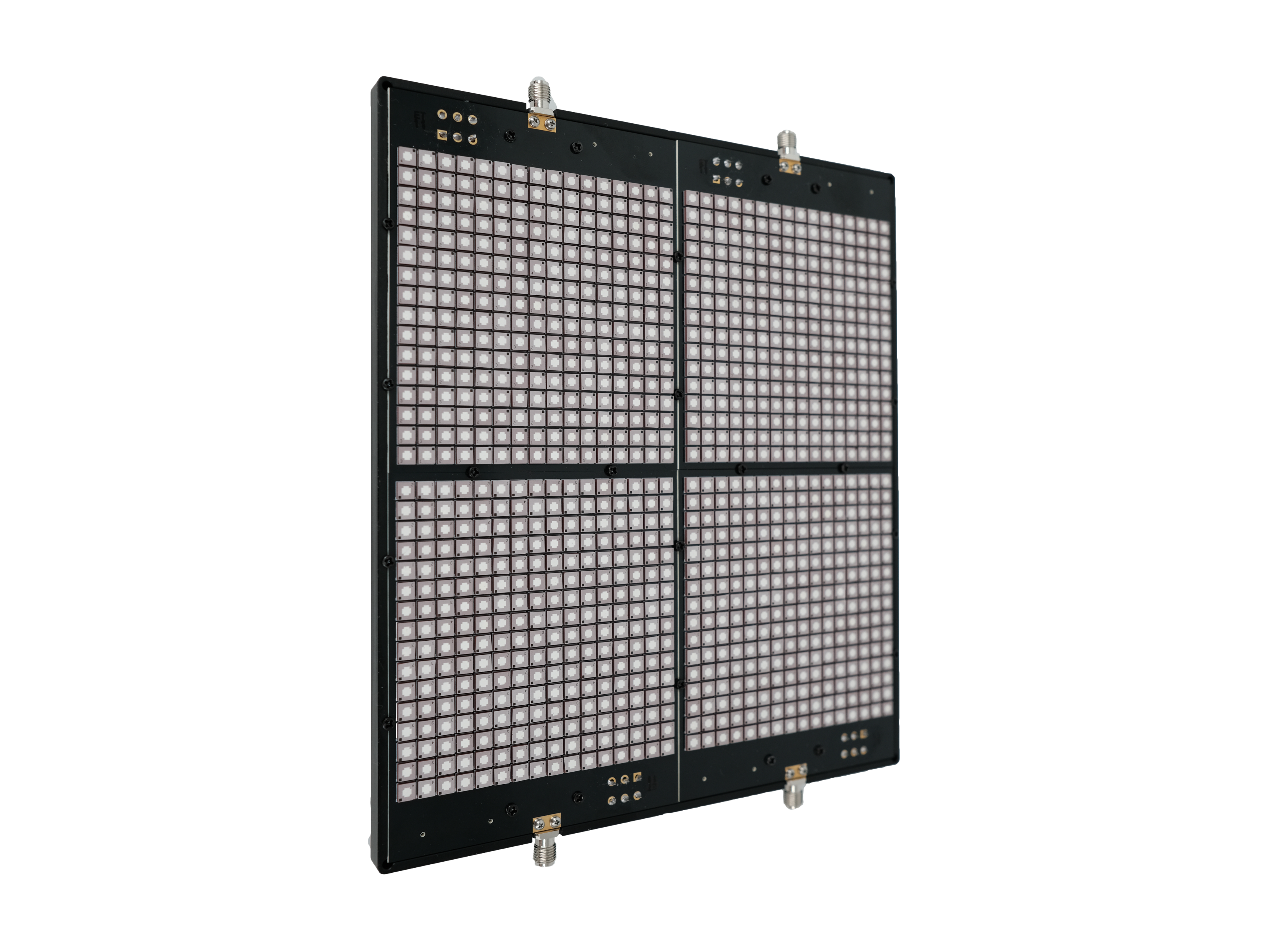
1024 array antenna

Conclusion

Recent developments in the global LEO satellite communication sector indicate an impending transformation in wireless communication technologies. Satellite internet has become a strategic priority in many countries’ infrastructure plans, with efforts focused on lowering costs by developing small satellites such as CubeSats. At the same time, boosting R&D in satellite communication technologies, especially in Ka-band array antennas and the development of payloads, ground stations, and user terminals, is critical to establishing a complete satellite communication industry chain and achieving autonomous product design capabilities.

WiFi 7 Revolutionizes Telemedicine, Bridging Healthcare Gaps Across Urban and Rural Areas

WiFi 7 is reshaping the future of telemedicine, bringing high-quality healthcare services directly to patients’ fingertips. With its unmatched speed, stability, and ultra-low latency, WiFi 7 provides the essential connectivity for seamless telemedicine experiences. Whether enabling smooth video consultations, connecting advanced medical IoT systems, or powering smart healthcare devices, WiFi 7 ensures a robust and high-quality connection.


What is Telemedicine, and Why Do We Need It?

Since the COVID-19 pandemic, telemedicine has become a vital tool in healthcare, enabling medical professionals to consult with patients remotely. But its value extends far beyond infectious disease control. Telemedicine has become essential across various scenarios:

Remote Area Care: Telemedicine provides a lifeline to underserved rural, mountainous, or desert regions. Through virtual consultations, residents can access healthcare without long and exhausting travel.

telemedicine

Home Care/Rehabilitation: Patients can receive care and rehab guidance from home, minimizing hospital visits and allowing healthcare providers to monitor health remotely.

Elderly/Disabled Care: Seniors and individuals with mobility challenges can access regular medical care via virtual appointments, ensuring continuous health support.

Emergent Situations: Telemedicine ensures patients receive essential care in disaster zones or conflict areas, where geographical and safety constraints limit access.


Emerging Applications in Telemedicine

With smart healthcare devices paired with telemedicine, they offer more advanced applications.

Wearable Devices: Wearable tech can monitor vital signs such as body temperature, blood pressure, hydration levels, and even glucose trends. These devices continuously transmit data, allowing healthcare providers to monitor patient health in real time and make accurate assessments during remote consultations.

3D Hologram Technology: 3D holography enables healthcare providers to present interactive patient models and health data remotely, enhancing diagnostic precision and improving treatment planning.

3D Hologram in smart healthcare

Remote Surgery: Surgeons can perform complex procedures remotely using robotic systems and ultra-low latency networks. This is particularly beneficial for optimizing the use of medical resources, reducing doctors’ exposure to high-risk environments, and supporting surgical training or assistance purposes.

These innovations are transforming the healthcare landscape, and Wi-Fi 7 is pivotal in delivering resilient, high-speed connections that ensure seamless performance across all telemedicine applications.

Features of WiFi 7

  • Multi-Link Operation (MLO) allows simultaneous use of multiple bands for better performance.
  • 320 MHz channel bandwidth offers double the throughput compared to Wi-Fi 6.
  • 4K-QAM modulation enables higher data transmission efficiency.
  • Enhanced MU-MIMO supports up to 16 spatial streams for improved device connectivity.
  • Ultra-low latency minimizes transmission delays.

How YTTEK Supports WiFi 7

In the realm of WiFi 7 development, YTTEK’s PluSDR is a powerful SDR platform, empowering researchers and engineers to innovate in wireless systems design. It can easily serve as a versatile arbitrary waveform generator, spectrum analyzer, network analyzer, and signal analyzer, and more critically, it enables dual-link real-time radio transmission.

Key Features of PluSDR (YTPC400)

  • Highly flexible software-defined radio platform
  • Supports a frequency band of 10 MHz to 9 GHz
  • 400 MHz high bandwidth per channel
  • Supports 5G NR, WiFi, and CCSDS (satellite communication) standards

With advanced FPGA technology, PluSDR empowers system developers to rapidly prototype and validate WiFi algorithms for standards like WiFi 6, WiFi 6E, and WiFi 7. By simplifying the path from initial concept to real-world implementation, PluSDR accelerates development cycles. This not only enables faster time-to-market but also reduces overall product development timelines.

LEARN MORE ABOUT PluSDR

Circular Polarization in mmWave Applications. Enhances Connectivity in 3 Aspects

The rise of mmWave (millimeter-wave) technology in communication systems has sparked significant interest due to its ultra-high-speed wireless connectivity. From 5G to emerging 6G networks, mmWave applications are shaping the future of telecommunications. In this context, circular polarization (CP) is vital in enhancing signal quality and overcoming challenges unique to mmWave communication. 


Introduction of mmWave Communication 

mmWave operates in the 30 to 300 GHz frequency range and is a crucial enabler of advanced communication systems. Its high-frequency nature allows for data rates of several gigabits per second, reshaping many application scenarios. 


5G and 6G networks: These next-gen networks leverage mmWave to meet growing demands for data and low-latency services in urban and industrial environments. mmWave provides a high-quality network for immersive virtual and augmented reality (AR/VR) applications, cloud gaming, remote education and instant conferencing, and virtual workspaces (Metaverse). 

5G B5G 6G


Autonomous vehicles: mmWave technology enables fast, real-time data exchange between vehicles, intelligent transportation systems (ITS), and the cloud, ensuring safe and reliable autonomous driving. 

Satellite-Connected Car


Satellite communication: In space-based networks, mmWave provides high-throughput communication channels for satellite-to-ground and inter-satellite links. 

 

Challenges Faced by mmWave Communication and How Circular Polarization Overcomes Them

mmWave offers a promising solution for many applications requiring high-quality networks, but it also comes with several challenges. 


Propagation loss: mmWave signals face higher propagation losses, particularly in urban environments where buildings and other obstacles block or reflect signals. Circular polarization can help maintain signal quality in environments with significant signal reflections and polarization mismatches. 


Multipath interference: In urban or indoor settings, mmWave signals often encounter reflections from walls, windows, and other surfaces, leading to multipath interference. Circular polarization significantly reduces the impact of multipath reflections, as its signal pattern minimizes destructive interference caused by these reflections. 


Polarization sensitivity: Currently, 5G mmWave communication systems use linear polarization, which can suffer from polarization mismatch if the transmitting and receiving devices are not perfectly aligned. Circular polarization mitigates this by allowing signals to be received regardless of device orientation, providing more consistent communication quality. 


YTTEK’s Support in Circular Polarization R&D 

Y.BEAM is a 28GHz detachable FEM (Front-End Module) designed to drive innovation in circular polarization. It features two independent 4×8 32-element antenna arrays, which can be configured for LHCP (Left-Hand Circular Polarization), RHCP (Right-Hand Circular Polarization), or horizontal/vertical linear polarization through GUI. Additionally, the detachable antenna design allows engineers to switch out antennas and experiment with different substrate materials easily. 

Key Features of Y.BEAM

  • Detachable antenna array design for easy customization 
  • 26.5 – 29.5 GHz operating frequency for LEO satellite and 5G mmWave R&D 
  • Dual 4×8 antenna arrays with independently configurable polarizations 
  • Supports TDD half-duplexing and FDD 
  • IF frequency range of 2.6 – 5.8 GHz  
  • 48dBm high EIRP 


Y.BEAM enables 5G mmWave and LEO satellite communication researchers to efficiently validate communication algorithms, such as beamforming, beam management, and beam tracking. It can also serve as a signal source for OTA (Over-the-Air) testing, particularly in high-frequency applications where precise signal path and loss measurements are critical. 

 

LEARN MORE ABOUT Y.BEAM

LEO Satellite

Polarization is a key factor in antenna design, directly influencing performance and transmission efficiency. In LEO (Low Earth Orbit) satellite communications, array antennas are widely used, with circular polarization strategically employed. 


What is Antenna Polarization? 

Polarization refers to the orientation of an electromagnetic wave’s electric field vector. It describes how the electric field oscillates in a particular direction as the wave propagates. Based on the direction of the electric field vector’s oscillation, there are two main polarization types: linear and circular. 

Linear Polarization: The electric field vector oscillates along a fixed direction, such as horizontal or vertical. When the polarization directions of the transmitting and receiving antennas align, signal transmission efficiency is optimized. However, if the polarization directions differ, signal strength can diminish. Vertical or horizontal linear polarization antennas are commonly used in mobile communication systems. 
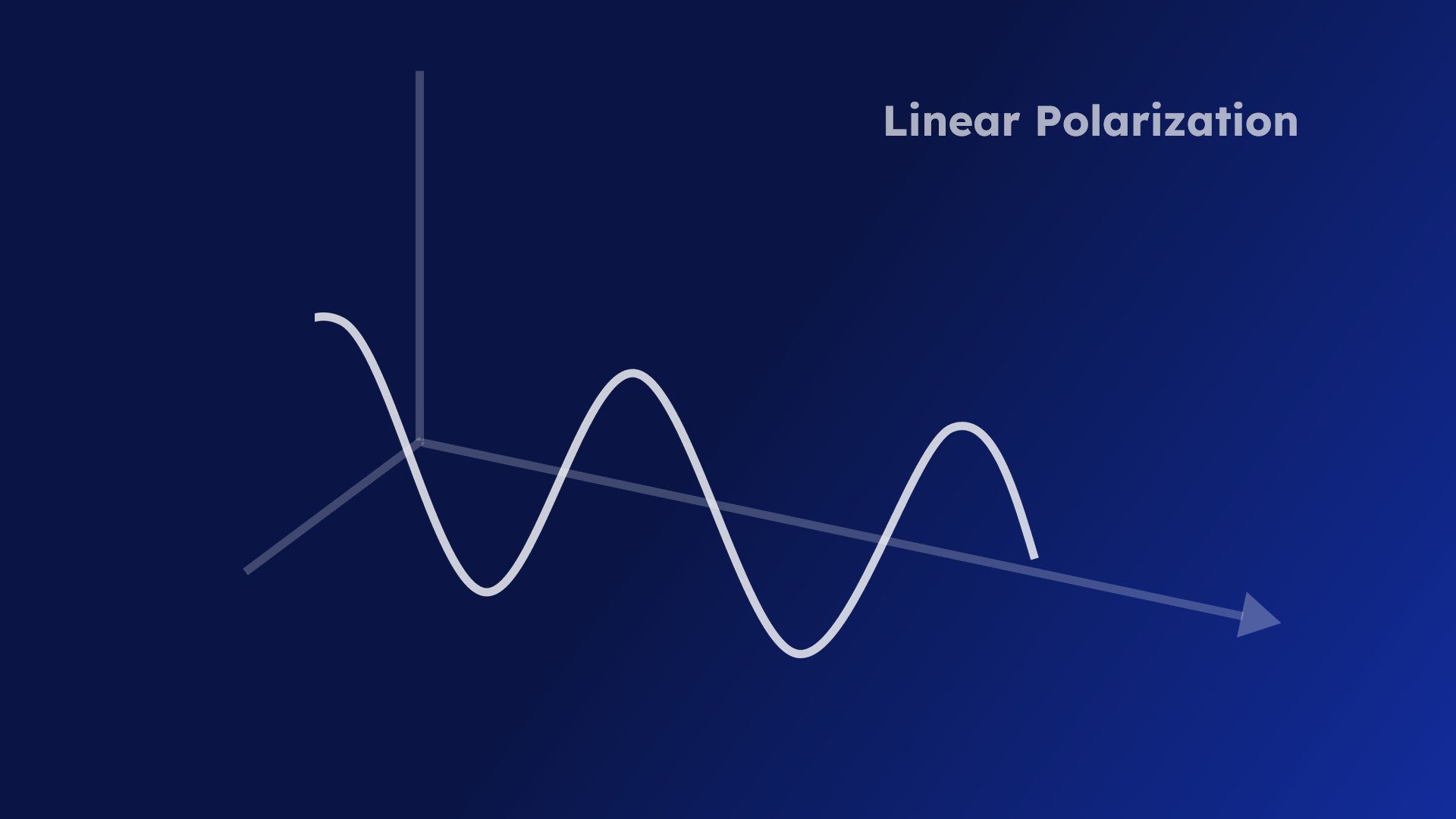
Linear Polarization


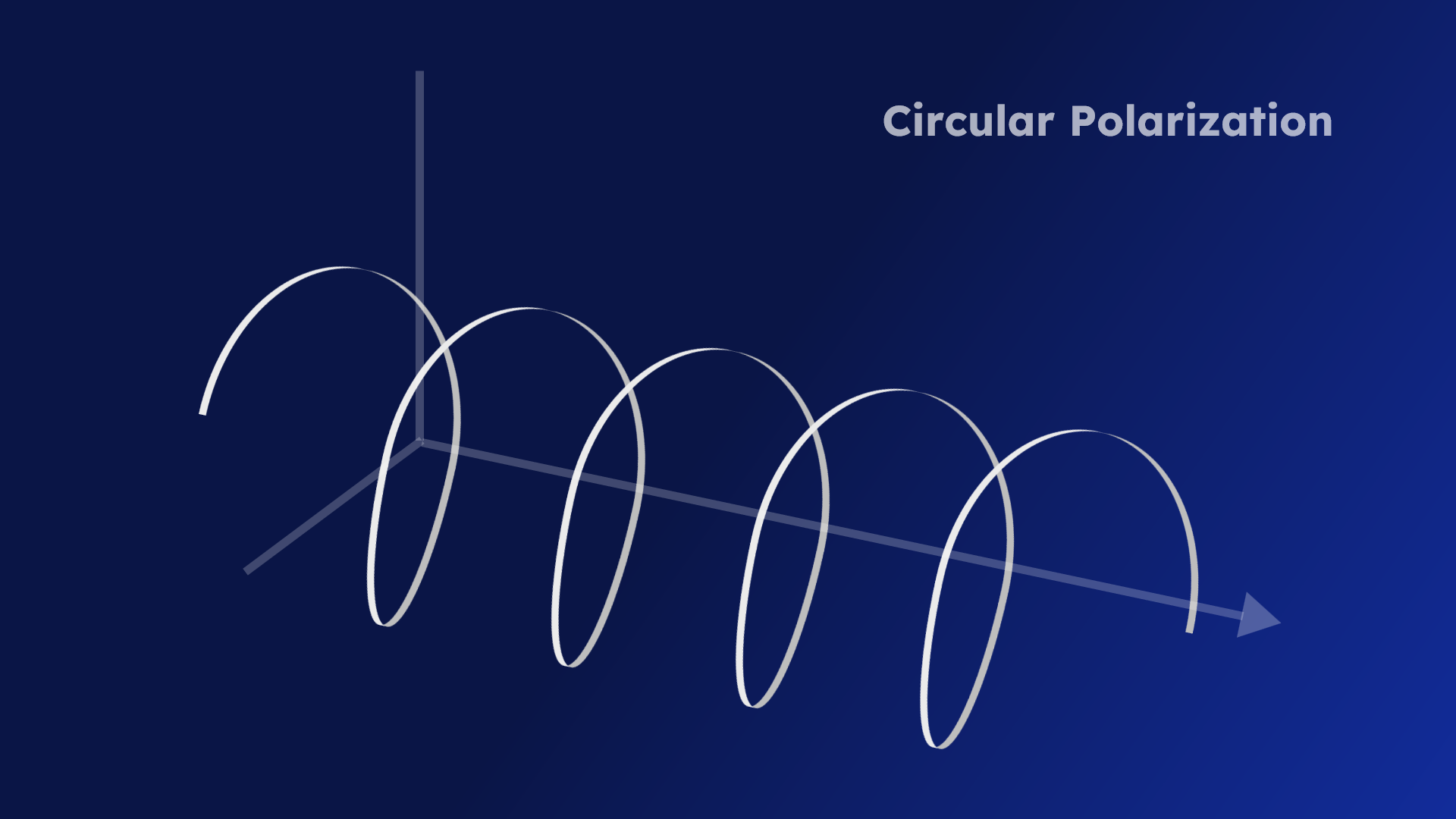
Circular Polarization: The electric field vector rotates in a helical pattern as the wave propagates, which can be either LHCP (Left-Hand Circular Polarization) or RHCP (Right-Hand Circular Polarization). Circular polarization helps to minimize signal attenuation caused by angular variations between the transmitting and receiving ends, making it particularly suitable for environments with movement, rotation, or multipath effects. Circular Polarization
 

Why Do LEO Satellites Use Circular Polarization? 

Circular polarization antennas reduce signal attenuation across various transmission paths, especially when satellites move rapidly. This enhances signal stability and communication efficiency. Here are three critical features of circular polarization. 

Reduce Polarization Loss: In LEO satellite communications, the satellite’s constant movement means that the transmission path and angle are not fixed. Linear polarization can lead to signal loss or attenuation due to the misalignment of polarization angles between the transmitting and receiving ends. 


Improve Multipath Interference Resistance: Circular polarization antennas effectively counter multipath effects, where signals reflect off different surfaces before reaching the receiver, potentially causing interference or signal distortion. Circular polarization maintains higher signal integrity across various reflection paths, thus improving signal quality. 


Reduce Path Loss: Atmospheric conditions like rain, fog, and ionospheric disturbances can degrade satellite signals. With its rotating electric field, circular polarization is less affected by these conditions than linear polarization. This makes it more effective at reducing path loss, especially in long-distance satellite communications, ensuring more stable and reliable signal transmission. 


YTTEK’s Support for Circular Polarization Antenna R&D

YTTEK’s Y.BEAM is a 28GHz detachable FEM (front-end module) tailored for LEO satellite communication R&D. This module combines a detachable array antenna design with circular polarization capability and an integrated up/down converter, offering a comprehensive solution for LEO satcom and 5G mmWave array antenna design, communication algorithm development, and system integration. 


Features of Y.BEAM 

  • Antenna array module detachable design 
  • 26.5 – 29.5 GHz operation frequency for LEO / 5G mmWave R&D 
  • Dual 4×8 antenna modules integrated with designable polarization independently 
  • Support TDD half-duplexing operation and FDD 
  • 2.6 – 5.8 GHz IF frequency range 
  • 48dBm high EIRP 


Y.BEAM features two independent 4×8 32-element antenna array modules. Each module can be configured for LHCP (Left-Hand Circular Polarization), RHCP (Right-Hand Circular Polarization), or horizontal/vertical linear polarization, making it ideal for both LEO satellite communication and 5G mmWave R&D. This module serves as a versatile tool for researchers to conduct OTA testing to validate algorithms related to beamforming, beam tracking, and beam management. 

 

LEARN MORE ABOUT Y.BEAM