
Satellite

In a report issued by market research firm ABI Research, projections indicate that by the year 2030, the global connections for Non-Terrestrial Networks (NTN) are anticipated to surge to 175 million, accompanied by a corresponding expansion in the global market size for satellite services, expected to reach $124.6 billion within the same timeframe. The introduction of the 3GPP NTN (Non-Terrestrial Network) standard has injected fresh momentum into the application of satellite communications in the B5G/6G era. Thus, what factors contribute to the escalating significance of satellite communication in the B5G/6G epoch? Let’s scrutinize its paramount importance and indispensability. 

Meeting the Rising Demands of Emerging Applications in the B5G/6G Era  

The demand for higher data traffic and bandwidth is rapidly increasing because of the emergence of new applications such as the Internet of Things (IoT), autonomous driving systems, and emergency communications. Satellite communications are gaining prominence due to their global coverage and stability, which can overcome the limitations of ground-based infrastructure and provide reliable communication support, particularly in remote areas. During special circumstances such as disasters or wars, satellite communications can serve as crucial emergency networks, offering vital communication links. 

Satellite connection

Overcoming Challenges and Implementing Solutions in B5G/6G Satellite Testing

Every stage of the development of new satellites, from design to validation and manufacturing testing, is crucial. In the satellite communications development lifecycle, YTTEK offers comprehensive support, from design conception to testing and deployment.

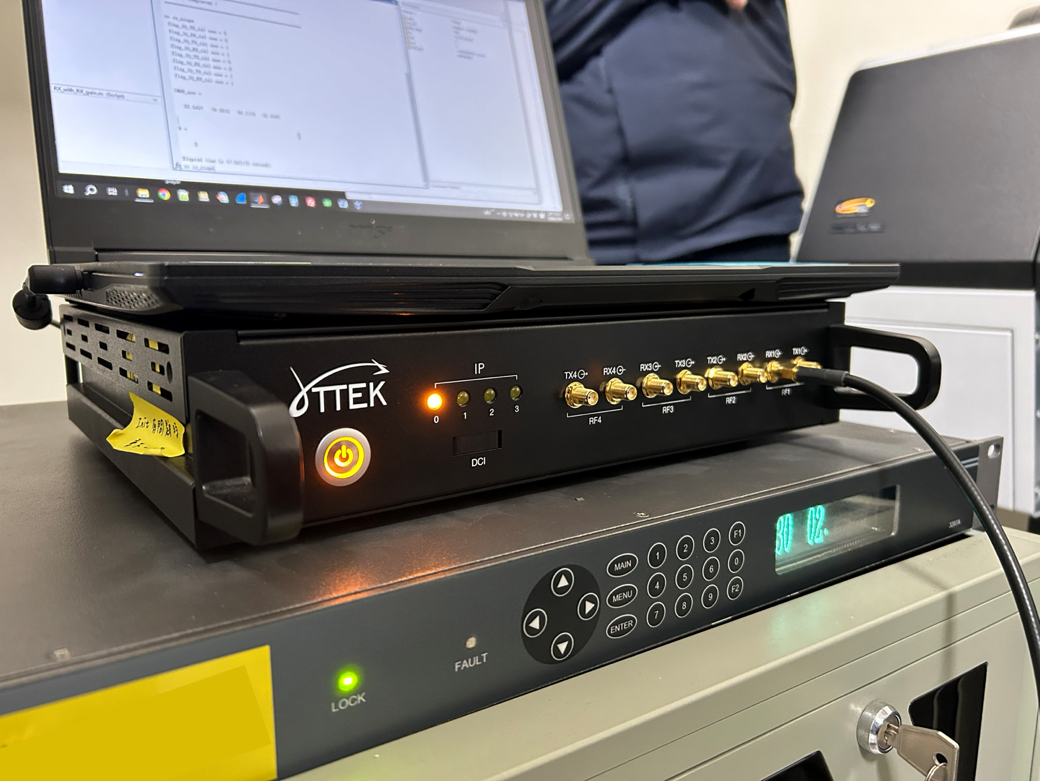
Within the SPACELINK series, YTTEK offers the Y.LOAD S satellite communication payload, a highly flexible X-Band SDR satellite communication device capable of meeting various communication needs and scenarios. The Y.FORCE S is a high-speed satellite modem compliant with CCSDS standards. Its SDR architecture provides high communication adaptability and software upgradeability. Through collaboration with the Taiwan Space Agency, we successfully utilized Y.FORCE S to receive signals from Taiwan’s Forsat-5 and decode signals from the U.S. Landsat-8 and Landsat-9 satellites, validating its performance and reliability.

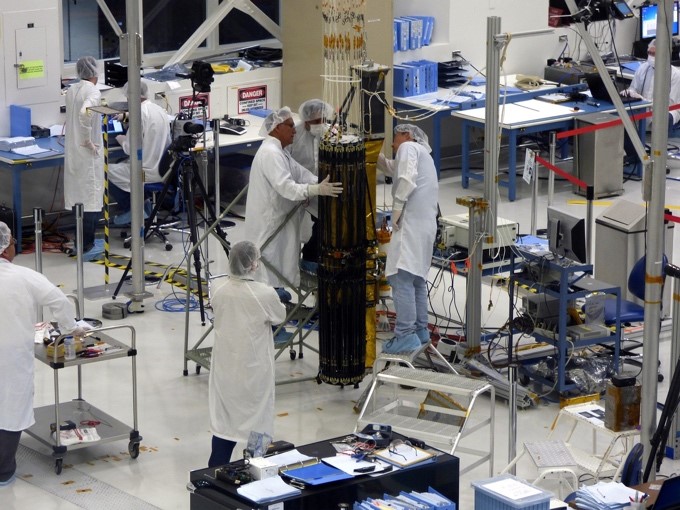
The satellite testing phase is a crucial and exciting part of the development lifecycle, where satellite communication payloads like Y.LOAD S and satellite modems like Y.FORCE S play vital roles. They provide reliable satellite communication systems, ensuring stable signal connections for tasks including satellite command and control and data transmission during satellite testing.

YTTEK’s Y.FORCE series offers a highly flexible software-defined radio platform in the development and testing scenarios, providing high-bandwidth options. It can serve as a development platform, allowing for quickly constructing a wide-band full-function wireless communication system through MATLAB or C/C++ code. It can also be utilized as a performance tester on the production line to test the RF performance of products.

Production line testing

YTTEK provides a suite of potent resources to facilitate satellite communication development, supporting satellite operators and equipment manufacturers in developing efficient satellite communication systems, and gaining a competitive edge in 3GPP NTN systems. This includes accelerating the design, testing, and manufacturing processes with our powerful instruments and solutions.

Learn more about Y.LOAD S Satellite Communication Payload >>

Learn more about Y.FORCE S High-Speed Satellite Modem >>

Driving the Future. Vehicle-to-Satellite Systems Transforming the Smart Car Industry

The rapid advancement of satellite communication technology has brought about endless possibilities for various industries, and the emergence of vehicle-to-satellite(V2S) technology is one of the most notable trends. In the automotive industry, the integration of vehicle-to-satellite technology has not only transformed traditional automobile models but also provided unparalleled prospects for the advancement of intelligent transportation systems. We will discuss various potential use cases in the article to help you gain a better understanding.

Autonomous vehicle PIXABAY

Autonomous vehicle/PIXABAY

Autonomous Driving

Robust communication systems are essential for autonomous driving. By leveraging satellite connectivity, vehicles can achieve real-time global positioning, which ensures precise navigation and mitigates driving risks, advancing autonomous driving.

Emergency Services and Safety Features

Vehicle-to-satellite technology is crucial for emergency services and safety. Satellite communication enables the rapid transmission of alerts and location data, facilitating a timely response from responders and minimizing losses.

Vehicle Diagnostics and Maintenance

Satellite connectivity allows remote vehicle diagnostics and maintenance, providing enhanced reliability. Manufacturers can diagnose issues and schedule maintenance without physical visits. Remote software updates ensure access to the latest features and enhancements.

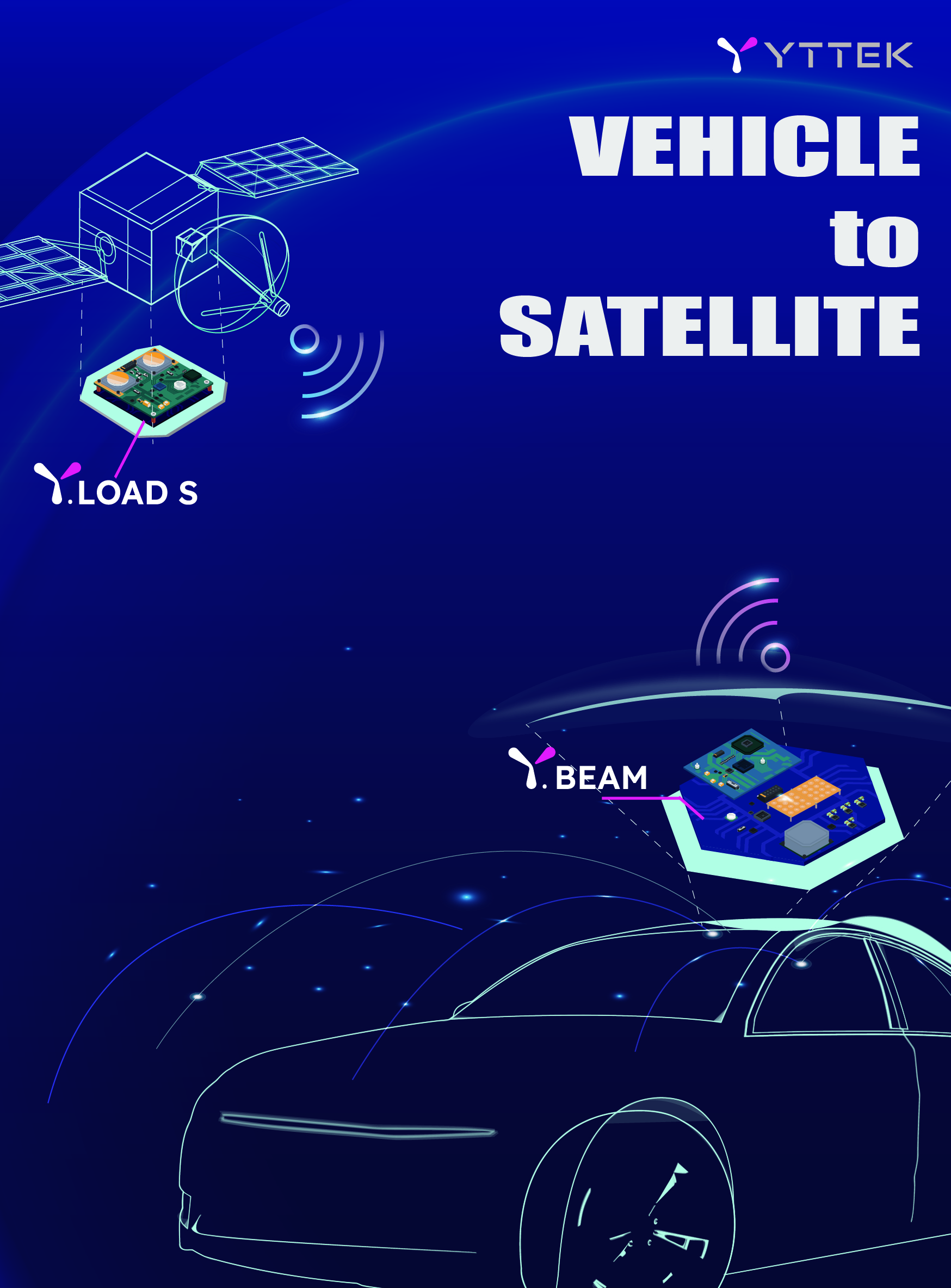
Y.LOAD Satellite Payload and Y.BEAM K / Ka band Antenna's Innovative Integration YTTEK leverages its total wireless communication solution to make visions a reality. At CES 2024, YTTEK unveiled its Vehicle-to-Satellite solution, which seamlessly integrates the Y.LOAD S satellite communication payload with the Y.BEAM low Earth orbit satellite antenna.  Y.BEAM is a K/Ka band array antenna that features an optimized design that balances antenna size, weight, directionality, and performance to meet the efficiency demands of the vehicular environment. Meanwhile, Y.LOAD S is a software-defined architecture payload for satellite communication, offering high flexibility, stability, and reconfigurability. This seamless integration impressed attendees at CES 2024, enabling smooth satellite-to-vehicle communication.

As a provider of total wireless communication solutions, YTTEK also offers the Y.FORCE S high-speed satellite modem, which serves as a transmitter and receiver for satellite ground stations. In collaboration with the Taiwan Space Agency (TASA), we deployed the Y.FORCE S to successfully and promptly receive signals from Taiwan’s Formosat-5 satellite and decode signals from the U.S. Landsat-8 and Landsat-9 satellites. Built on an SDR architecture, the Y.FORCE S provides high flexibility and software upgrade capabilities, delivering a cutting-edge satellite modem solution for TASA.

Ground Station Illustration PIXABAY

Ground Station Illustration/PIXABAY

Vehicle-to-satellite technology provides substantial advantages and serves as a pivotal element in advancing intelligent transportation systems. YTTEK aims to complement ground-based mobile communication with satellite communication to deliver seamless signal connectivity.

Learn more about Y.LOAD S Satellite Communication Payload >>

Learn more about Y.FORCE S High-Speed Satellite Modem >>


SDR

The rapidly advancing field of modern wireless communication systems, whether in the context of 5G or satellite communication, has generated an urgent demand for software-defined radio (SDR). The flexibility and reconfigurability of SDR provide significant benefits in dealing with various aspects of modern communication systems, such as handling multiple standards, rapid prototyping, system upgrades, quick deployment, and cost-effectiveness. 

Unveiling the Power of SDR in Modern Wireless Communication Systems

SDR is a communication technology that has revolutionized how wireless transmission devices are designed and implemented. In the past, most components of these devices were created using hardware. However, with the rapid development of various software and hardware technologies, many hardware modules’ functionalities can now be fully realized through software. This means that modules implemented with software can dynamically adjust various transmission technologies or parameters, providing greater flexibility. The use of software-based modules enhances adaptability and proves to be more efficient for developing new technologies compared to traditional hardware approaches. 

SDR showcases exceptional adaptability in a range of fields. It is particularly efficient in military operations, where it supports various communication standards and plays a pivotal role in tasks like wireless spectrum monitoring. In RF testing, its reconfigurable nature provides engineers with a flexible toolset to analyze signals across multiple bands, which ultimately helps in ensuring optimal device performance. 

SDR Technology Paving the Way for Seamless Wireless Development 

YTTEK has developed various products that utilize SDR technology, among which the PluSDR series is a wireless platform built on SDR technology. It is designed for wireless system development and research, making constructing a fully functional communication system easy. With Y.FORCE, users can conveniently transmit and receive raw In-Phase/Quadrature (I/Q) data. The platform can work as an arbitrary waveform generator, spectrum analyzer, network analyzer, and signal analyzer, and can be programmed using C++ or Matlab code. 


Y.FORCE SDR Platform in Satcom Application 

PluSDR SDR Platform in Satcom Application

In satellite communication applications, the high-speed satellite modem Y.FORCE S from the Y.FORCE series has successfully received signals from Taiwan’s Formosat-5 satellite and the U.S. Landsat-8 and Landsat-9. A highly flexible satellite communication payload is crucial in the rapidly evolving landscape of diverse and dynamic communication demands. YTTEK’s Y.LOAD S, an X-Band satellite payload, addresses this need by integrating a SDR architecture and a high-performance FPGA. This innovative design allows for customization to meet the unique communication requirements of our clients, facilitating faster deployment of comprehensive communication systems.  

Satellite / iStockphoto 

Satellite / iStockphoto

YTTEK also offers Y.LOAD G, a communication payload designed for applications such as unmanned aerial vehicles (UAVs). It is equipped with rapid frequency hopping technology, achieving a rate of 1000 hops per second. This capability effectively mitigates signal interference during transmission, proving particularly crucial in applications related to national defense and security. 

YTTEK excels in providing versatile SDR solutions, leveraging adaptability and programmability to enhance communication across diverse domains. Our solutions offer tailored benefits, streamlining development and providing flexible communication solutions. 

Learn more about PluSDR SDR Platform >>

Learn more about Y.FORCE S High-Speed Satellite Modem >>

Learn more about Y.LOAD G UAV Communication Payload >>

Evolving UAV Applications in Smart Cities, Intelligent Transportation, and more

Unmanned Aerial Vehicles (UAVs), also known as drones or remotely piloted aircraft (RPA), have become increasingly important in the field of communication. In addition to low Earth orbit(LEO) satellites, UAVs have emerged as another focal point for communication. They are characterized by their ability to be controlled autonomously by onboard computers or remotely by a pilot on the ground or in another vehicle.

Drone in smart city / UNSPLASH

Transforming Urban Living with UAVs

The use of drones equipped with precision sensors and communication technologies is helpful in providing real-time data on environmental parameters, which can elevate urban living in smart cities. They actively monitor air quality, noise levels, and other crucial factors, enabling authorities to promptly address pollution concerns and enhance overall environmental quality. Furthermore, UAVs provide invaluable insights into public safety by surveying critical areas and supporting emergency response teams. This not only results in manpower savings but also ensures precision and timely intervention compared to traditional methods.

Real-time Monitoring for Traffic Optimization / iStockPhoto

Real-time Monitoring for Traffic Optimization / iStockPhoto

Real-time Monitoring for Traffic Optimization

Within the realm of intelligent transportation, UAVs are reshaping the way we perceive and manage traffic. Drones equipped with advanced imaging systems and communication capabilities can monitor traffic conditions in real-time, helping to alleviate congestion, enhance traffic flow, and improve overall transportation efficiency. In smart traffic management, UAVs offer dynamic insights, allowing authorities to respond swiftly to incidents and optimize routes.

Crucial Role of UAVs in National Defense Security

UAVs’ autonomous flight capabilities make them ideal for patrolling vast and challenging terrains, providing real-time intelligence to military forces. Furthermore, UAVs enhance situational awareness and responsiveness in critical situations, contributing to nations’ overall security and defense strategies.

YTTEK has designed Y.LOAD G – a specialized communication payload for UAVs. Operating in the S-band, it integrates a highly adaptable Software-Defined Radio (SDR) architecture and a high-performance FPGA. This design allows for customization to meet the distinct communication needs of our clients. The Y.LOAD G is equipped with rapid frequency hopping technology at a rate of 1000 hops per second, effectively mitigating signal interference during transmission. This feature is particularly critical in the realm of national defense and security applications.

Y.LOAD is currently undergoing a 30-50 km flight test to enhance drone performance using innovative technologies for an extended flight range and improved communication efficiency. YTTEK aims to advance drone technology by providing cutting-edge solutions for smart cities and various application scenarios. These efforts are expected to result in superior products and services for customers, fostering continuous progress on the path of technological innovation.

Learn more about Y.LOAD G UAV Communication Payload >>

The emergence of LEO (Low Earth Orbit) satellites has created exciting possibilities for communication and observation, heralding a new era for technology and business. However, the development of LEO satellites poses numerous challenges, including the rigorous environmental testing and standardization of communication protocols. This article aims to explore and explain the complexities of these specific factors.

Environmental Testing Illusion PIXABAY

Environmental Testing Illusion / PIXABAY

Rigorous Environmental Testing

The testing process of space technology in the LEO satellite domain is crucial to ensure its reliability and resilience in harsh space conditions. As LEO satellites launch into space, they must endure extreme temperature variations and vibrational stress. The term “extreme temperature variations” refers to the sudden shift of the satellite’s temperature from room temperature on Earth’s surface to the extremely low temperatures of space, and the potential for high temperatures when exposed to direct sunlight. These rapid temperature changes can cause stress on the satellite’s structure and materials, which require designs that can withstand such fluctuations.

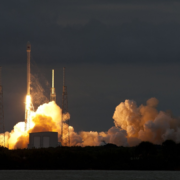
A satellite being launched into space PIXABAY

A satellite being launched into space / PIXABAY

Vibrational stress refers to the intense mechanical vibrations that occur during a satellite launch. These vibrations can affect different satellite parts, making it necessary to conduct detailed vibration testing during the design and manufacturing stages. Exposure to radiation in space is another critical consideration in the rigorous testing of satellites. The space environment is characterized by high levels of radiation, including both solar and cosmic radiation. This can potentially impact the functioning and performance of satellite components.

Standardized Communication Protocols

The absence of standardized communication protocols for LEO satellites poses a current challenge in their development. Some satellite operators, such as SpaceX and Amazon, adopt a vertically integrated approach and develop their own communication protocols. On the other hand, companies like OneWeb and Telesat follow a collaborative strategy by entrusting satellite and terminal designs to traditional satellite manufacturers and terminal system integrators. They adhere to the DVB protocol standard, which is similar to synchronous satellites currently in orbit. It is noteworthy that 3GPP entered the satellite broadband communication domain relatively late. They incorporated NR NTN in R17 and anticipated its practical implementation in R19.

YTTEK’s Advanced Solutions for Satellite Communication

YTTEK offers a range of comprehensive solutions for satellite communication. These include satellite communication payloads, UT-terminal array antennas, and high-speed modems for ground stations. YTTEK’s Y.FORCE S is an X-Band ground station modem that operates using the CCSDS protocol. Distinguishing itself with dual transmit and dual receive RF paths, each capable of supporting a 400MHz bandwidth. This modem will play a pivotal role in receiving communication signals from Taiwan’s domestically developed LEO satellite this year.

YTTEK is enthusiastic about the revolutionary potential of LEO satellites. We aim to leverage these advancements to enhance connectivity, expand communication capabilities, and contribute to the evolution of satellite technology. Through our innovative solutions, we strive to play a crucial role in maximizing the positive impact of LEO satellites on satellite communication.

Learn more about Y.FORCE S Ground Station Modem >>

A low Earth orbit satellite viewing Earth from space.

In the field of emergency disaster response, Low Earth Orbit (LEO) satellites have emerged as an indispensable tool. With its high-frequency updates and global coverage, LEO revolutionizes how we approach crises, offering real-time solutions for enhanced preparedness and life-saving interventions. 

A man is directing disaster relief efforts.

Post-disaster assessment illustration / PIXABAY

Utilizing LEO for Disaster Management

In disaster management, LEO satellites play a crucial role by providing frequent updates and global coverage. During a disaster, satellite imagery and data provide critical information for real-time monitoring, post-disaster assessment, and efficient search and rescue operations. This enables authorities to respond to the situation quickly, save lives, and minimize losses. 

The Crucial Role of Emergency Satellite Communication

In emergencies, having access to satellite communication is crucial for maintaining connectivity. This is especially important when individuals find themselves isolated in remote, mountainous areas or when ground communication is interrupted, such as after an earthquake. 

Remedy for Desert and Mountain  

Satellites can provide internet access in remote areas like deserts and mountains where infrastructure development is a challenge. Unlike traditional methods that require cables and antennas, satellites can offer connectivity without extensive groundwork. This technology is a game-changer for ensuring connectivity in otherwise inaccessible regions. 

A Case Study of Ukraine

Amidst the ongoing conflict in Ukraine, the importance of LEO satellite technology in crisis response is evident. The compromised conventional communication infrastructure highlights the need for LEO’s real-time solutions as they become essential for emergency disaster response. The LEO-based transmission system is a critical tool for the Ukrainian Armed Forces and government. 

YTTEK’s Role in Disaster Management 

In emergency situations, having reliable and resilient connectivity is crucial. That’s where YTTEK’s satellite communication payload, SDRspace comes in. It provides satellite communication capabilities that are indispensable for effective communication in critical scenarios.


The SDRspace is specifically designed to fit the compact internal space of a LEO satellite, with a size of 1U and weight of 500g. Incorporating space-qualified components ensures compliance with the rigorous challenges of satellite launch and the harsh conditions of space. Furthermore, with a software-defined radio (SDR) architecture, SDRspace is highly flexible and perfect for diverse wireless communication needs in space.


 YTTEK envisions a pivotal role for LEO satellites in emergency situations, transforming disaster response with real-time solutions. We are committed to creating a future where LEO revolutionizes crisis management and becomes an integral part of global resilience, ensuring swift, efficient, and life-saving interventions during challenging times. We are eager to utilize advanced communication technology to achieve our goal.

Learn more about SDRspace Satellite Communication Payload >>

Navigating the Cosmos: Unveiling the Distinctions, Advantages, and Tomorrow's Opportunities of LEO Satellites

LEO stand out for low latency, enhancing communication transmission.

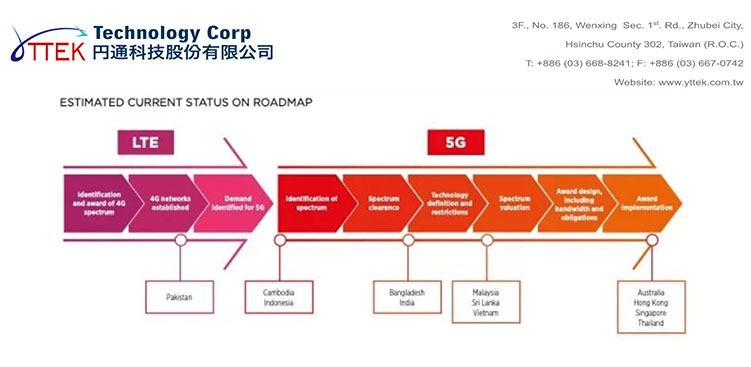
Countries in the Asia Pacific region have been at the forefront of many mobile technologies. The first start in Japan of launching 3G network, and the first commercial 5G began in South Korea. The difference in the historic establishment of fixed telecommunications networks between countries has had some effect on the uptake of mobile. No matter how the difference, all countries have seen a massive growth in the number of subscribers and the capabilities of mobile networks. Today the mobile industry is in the early stages of the 5G era. Widespread 5G adoption will take time, with 1.8 billion 5G connections by 2025, representing a state of approximately 20%. As 2G and 3G still continue to exist alongside 4G in today, those will have a key role coexisting with 5G into the 2030s. It is important to recognize that although the steps may be the same for each country, the detailed activities under each may vary. The key frequency bands to priorities for 5G ate the 3500 MHz range, 700 MHz and mmWave. The density of use, ease of moving incumbents to alternative frequency bands or alternative technologies; and impact on service and users. Care must be taken to consider the socio-economic benefits that arise from both old and new uses of spectrum. When considering the level of investment necessary for new 5G networks, it will be important that spectrum fees ate not set at high levels that will prevent operators from investing, which will impact on network roll-out and quality and drive up the cost of services. The approach adopted and associated license obligations will need to take account of policy objectives, available spectrum, and market specifics .


While some countries may be more advanced than others, it is cleat that all are working towards ensuring that 5G networks are deployed and operational. Spectrum clearance is genertally underway, although come countries are concentration only on one band (3500 MHz band) ar a priority which may lead to poorly simensioned and costly networks. Across Asia Pacific, some countries have been global leaders in the rollout of 5G. the first commercial 5G network in the world was launched in South Korea on 3rd April 2019. To build a 5G network with the best possible performance, operators need access to significant amount of harmonizes spectrum. This must be new spectrum separate from what is currently used for existing GSM, UMTS and LTE networks.

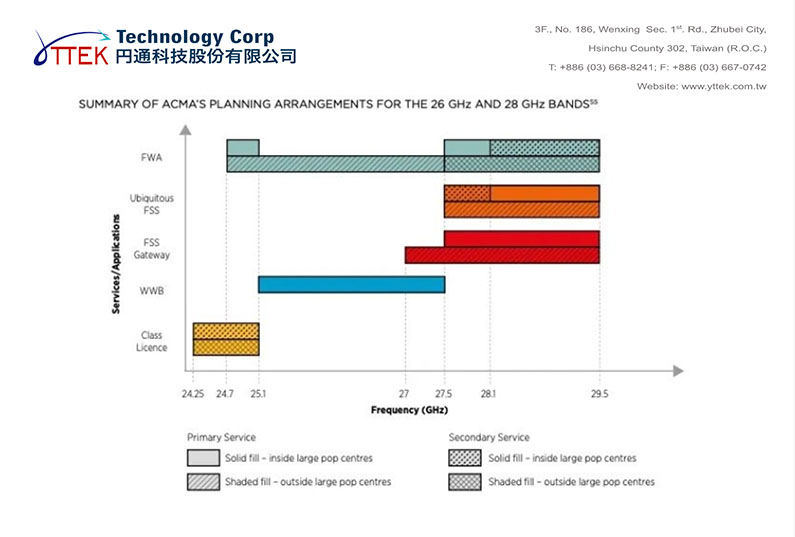
Spectrum status of 5G deployment in APAC Linking the variation in 5G depliment and difference in spectrum awards, countries have taken a very diverse approuch to aearding spectrum for 5G. a few countries have become the first in the world to aeard spectrum in the mmWave bands, with both 26 GHz and 28 GHz spectrum available in selested locationa. The 700 MH whoch was developed by the APT and adopted as a harmonised band in 2010 has neeed awarded on some countries. This band remains unacailable in many major APAC carkets sue to delays in the switch-off onf analogue TV and scross-border cooedination issues, there hava even been awards at 450 MHz wich can be applied to 5G networks. However, there remain a number od countries where spectrum for 5G has not beed awarded. A key point here is the need for regulators to consider spectrum needs not only for the short-term but also the long-term. In particular, the 4.8 GHz and 6 GHz bands may be key mid-band spectrum for 5G expansion. The GSMA estimated that by 2030, total mid-band spectrum demand for 5G services in cities will be, on average, 2 GHz 0 this is likely not achievable in the 3500 MHz band along. Regulators across APAC mist consider the use of these other bands and support their allocation to IMT at WRC-23, to ensure first that there can be high-quality broadband connections available to al citizens in their countries, and also that network expansion will not be hampered by an overly myopic spectrum release strategy. Australia is one of the leading markets in the Asia Pacific region in terms of the 5G rollout. it was enabled by the timely release of suitable 5G spectrum bands, particularly in the 3500 MHz band. As of Q2 2021 5G population coverage in Australia had reached 76.6% (GSMA Intelligence).


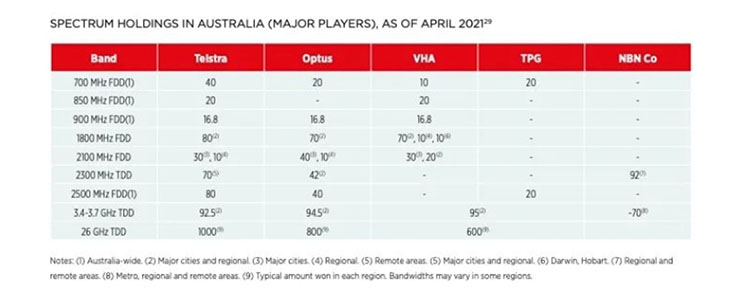
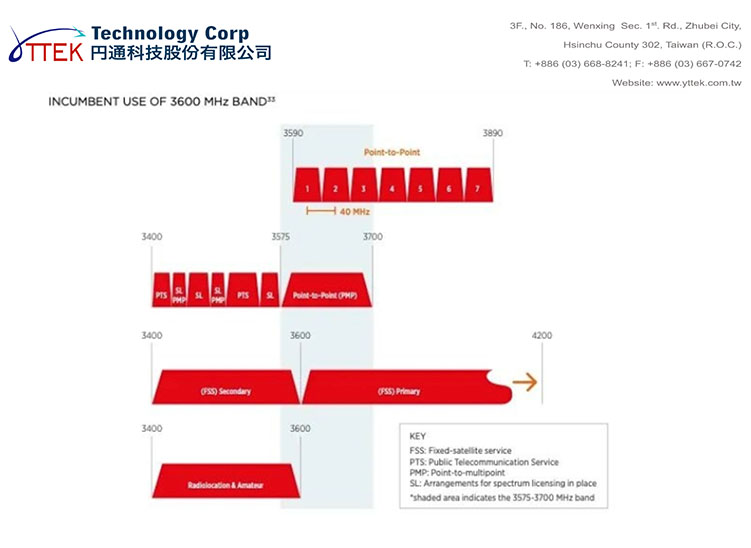
The Australian Communications and Media Authority (ACMA) has completed spectrum awards in the 3600 MHz (3575-3700 MHz) band in December 2018 and in the 26 GHz band in April 2021.


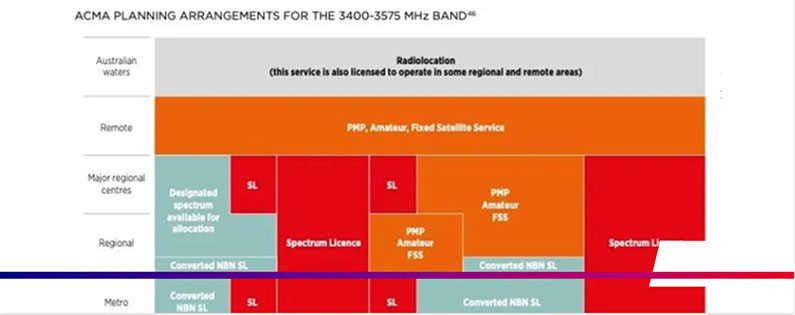
Spectrum in the 3400 to 2575 MHz range, 3400 MHz, in Australia hd previouls need assigned throuhgt different mechanisms which include administrative and class lidensing, these arranfements authorise a vatirty of services, including witeless broasband, fixed satellite, radiolocation and amateur services. The ACMA consider that the combination of measures would best maximise the overall public benefit derived from use od the band, while minimising the impect on incumbent services. In august 2021 the ACMA published a consultation on the technical options for the use of th 3400 MHz for witeless broadband in urband areas. The timeframe for the release of the refarmed 3400 MHz is expected to be quring Q2 2022 to Q2 2023. In Australia the 3700 to 4200 MHz band support a mic of incumbent uses including apparatus licensed point-to-point fixed service links(PTP), coordinated fixed satellite service(FSS) receive earth stations nad various low power class licensed devices. In February 2022, the Australian Government affirmed the ACMA’s decisiond on the allocation of the 3400-3575 MHz and 3700-4000 MHz for new and innocative techobologies including 5G.

The status in APAC

SpaceX公司積極建立其衛星互聯網服務,已將超過2800顆星鏈衛星送入軌道。目標4.2萬顆衛星來說,這只是個開端。依據目前的預估的資料,地球低軌可容納約5萬顆衛星,SpaceX的“星鏈”專案計畫發射約4.2萬顆,將占比超過80%。

曾經太空競賽由政府主導,在資本不間斷的努力下,已然成為各大廠未來相繼努力的目標。

在相對應的技術並不是那麼普及的時候,有限的低軌道太空空間裡,一個約定成俗的歸責慢慢開始。如同幾世紀以前的殖民開發,先到先得。圈了地,簽上名,相當於劃入自己的所有權。SpaceX為了打破這一個既有卻不成文的規定。提出星鏈計畫(Starlink),利用領先的科學技術匹量的發射衛星佔領太空區域。


根據USC衛星資料庫上的資訊顯示截止到2022年初在軌運行的人造衛星有4852顆,美國屬於大中擁有6成以上的佔有率,2944顆,以絕對的優勢遙遙領先其他國家的運行數量。

那麼低軌道衛星相對於其他的優勢,究竟在哪?為什麼幾個科技大廠爭相恐後的,渴望在這一個市場爭得一席之地。

雖然相較中高軌衛星存在覆蓋範圍不足的問題,但低軌衛星具有發射成本低、距離地面近、傳輸時延短、路徑損耗小、資料傳輸率高等優點,同時對終端的功率要求也較低,適合在手持移動終端上搭載。低軌衛星由於具有低成本、廣覆蓋、寬頻化、低延時等優點,現階段應用廣泛。

隨著時間的發展,火箭發射(可回收及一箭多星)、衛星製造(元件化和模組化)、積體電路(小型化和材料)等技術大幅度進步,寬頻星座逐漸成為發展熱點,逐漸出現了一批新的衛星通信計畫,其中starlink、OneWeb、O3b、TeleSat、LeoSat等是域外的典型代表,中國也相繼推出了“虹雲”、“鴻雁”等計畫。

低軌衛星通信技術也被認為是未來通信的新發展方向之一,在6G通信系統中已經確定會使用衛星通信+地面基站的組網方式,以實現地海空再加上宇宙的一體化,衛星通信技術被納入民用移動通信的大部隊。在這個時間節點,哪家廠商能率先克服天線、成本、基帶晶片等問題將衛星通信功能加入到自己的產品中,尤為值得大家關注。